How we work
How an enquiry becomes an engagement
There is no application form, no committee and no season. What there is, is a sequence — and knowing it in advance means the first message you send is a useful one rather than an introduction to an introduction.
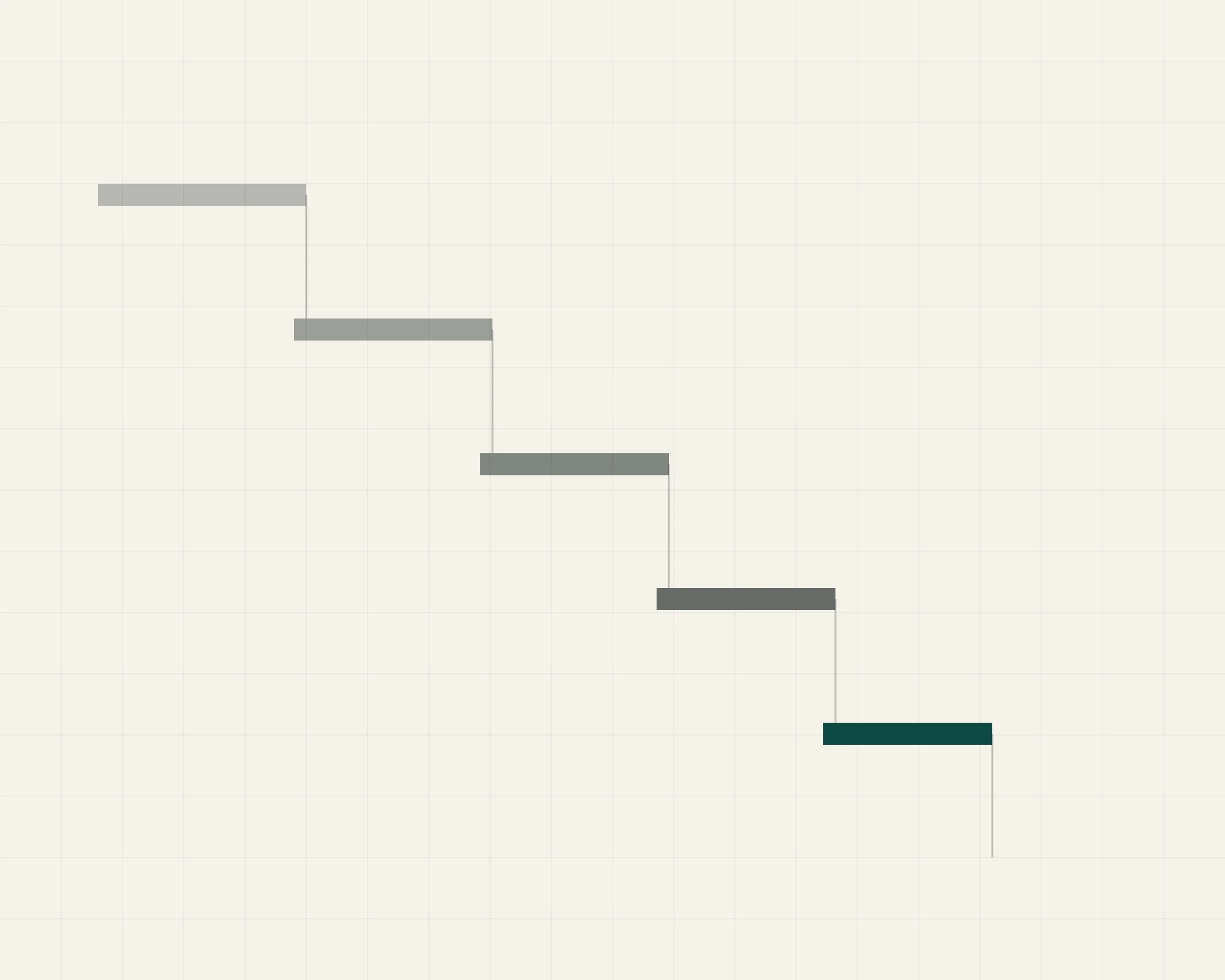
The sequence
Five stages, and what each one is for
Nothing here is a promise about outcomes. It is a description of process, which is the part an adviser can actually commit to.
01 · The enquiry
You write in through the form or by email. Sector, stage, what you are trying to raise or solve, and what has already been tried. The team replies within 24 hours, and the reply is a real response — a question, an opinion, or a straight answer that we are the wrong firm for this.
02 · The first conversation
A call about the company rather than the pitch. How the product works, who pays for it, where value is held, which authority would care about it, and what has to be true over the next twelve months for the plan to hold. We take notes; you do not need slides.
03 · Scoping
We set out in writing which of the six services the situation calls for, what each covers, what it produces and what it costs. Sometimes the honest answer is one service; sometimes three; occasionally none yet.
04 · The work
Delivery in the order that removes the biggest obstacle first. Risk work before positioning. Regulatory footing before structure. Structure before approaching investors. That order feels slow in week two and saves months by week ten.
05 · After the close
Where an investment or partnership completes, the relationship continues as portfolio work: a reporting rhythm the company can sustain, quarterly reviews that end in a decision, and honest conversations about follow-on funding.
What to expect
Four commitments, and their limits
These are things we control. Anything involving a third party — an investor, a regulator, a bank — is influenced but never controlled, and we will not present it otherwise.
- A reply within 24 hours Every enquiry gets a substantive first response inside a day. If the answer is that we are not the right firm, you get that within the same window rather than after two weeks of silence.
- Scope in writing before work begins What is included, what is excluded, what the deliverable is and what it costs. Nothing begins on a verbal understanding, which protects both sides.
- The unwelcome answer, early If the venture is not ready, if the structure is wrong, or if the money on the table costs more than it is worth, you hear it at the point where it can still change something.
- No promised outcomes We do not guarantee a raise, a valuation, a licence or a return. Those are decided by counterparties and markets. What we commit to is the process and the quality of the work inside it.

Practicalities
The questions that come up at scoping
Do we need to sign an NDA before the first call?
Not usually. A first conversation rarely needs anything confidential enough to justify the delay, and most founders find that describing the business at a normal level of detail is enough. Where the product genuinely cannot be discussed otherwise, an NDA is straightforward to arrange.
Can we engage for one service only?
Yes. That is the normal case. The services are contracted separately, and a single risk assessment or term sheet review is a complete engagement in itself.
How are fees structured?
It depends on the scope: some work is a fixed fee against a defined deliverable, some is a retainer for ongoing support. Whatever the shape, it is written down at scoping before anything starts.
Do you work remotely?
Yes, and most of the work is. The office in Business Bay matters for the meetings where being in the room changes the outcome, and those are worth travelling for; the rest is done wherever the company is.
What happens if we disagree with your advice?
You are running the company, so you decide. Our job is to make sure the decision is made with the trade-off visible rather than hidden, and to record our view where it differs so that nobody is confused about it later.
How do you handle confidentiality?
Client information is not discussed with other clients, and we do not publish client names, portfolio companies or case studies on this website. That is why this site describes method rather than results.
Stage one takes five minutes
Sector, stage, the obstacle, and what has already been tried. That is enough for a first reply worth reading, and it arrives within 24 hours.